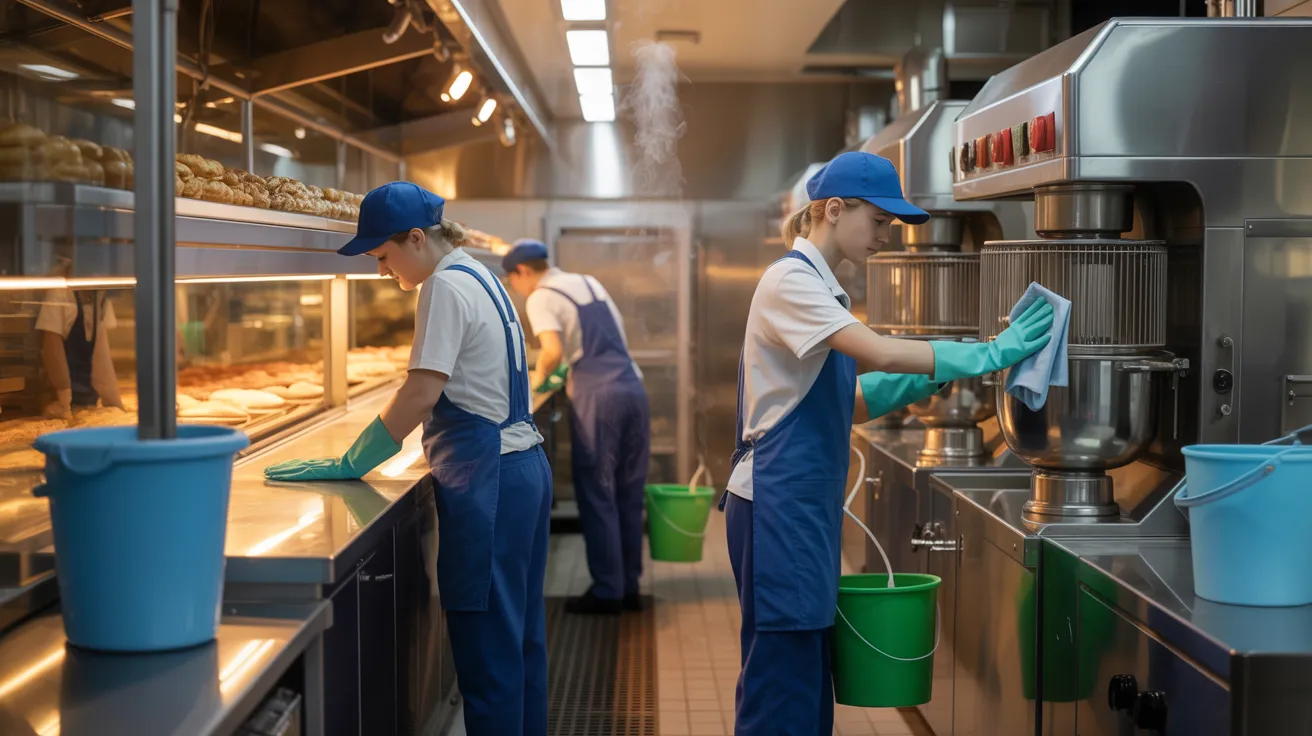
Food safety and professional sanitation experts in Brampton support your business in maintaining restaurants, commissaries, baking operations, warehouses, and food service units to code. They sanitize frequently touched areas, food preparation zones, equipment, floors, drains, restrooms, and prep areas with approved chemicals, proper dilution, and documented exposure durations.
Key Takeaways
- Brampton sanitation experts service restaurants, grocery departments, commissaries, warehouses, bakeries, schools, mobile vendors, and allergen-sensitive operations.
- Cross-contamination prevention is ensured by treating frequently contacted areas, food-contact equipment, kitchens, floors, drains, restrooms, and storage areas with sectional methods.
- Filing of conclusion through samples, reviews, and action records validates qualified contractors have verified approved sanitizer dilution, suitability, and exposure duration.
- Proper hygiene timelines consider danger, throughput, transitions, incidents, and standards when assigning everyday, regular, and cyclical activities by location.
- Vendors should exhibit HACCP, health regulatory expertise, WHMIS training, coverage, testimonials, coded implements, and compliance-ready cleaning documentation.
Food Safety Cleaning Requirements for Brampton Operations
You must follow food safety cleaning if your facility is regulated by health inspections, food codes, or HACCP protocols. This covers restaurants, cafeterias, commissaries, grocery food departments, butcher shops, seafood counters, convenience stores, and institutional kitchens.
You'll also need documented food sanitation in warehouses, food manufacturing plants, cold storage sites, retail bakeries, school nutrition programs, banquet halls, and meal delivery hubs. Mobile and temporary businesses matter as well, such as food trucks, event sellers, and temporary stalls. If your employees prepare supplies, portion finished foods, reheat items, or manage allergen inventory, your facility requires written cleaning standards. In Brampton, sanitation is compulsory; it represents regulatory, business, and safety adherence.
What Do Brampton Cleaning Experts Clean?
Your facility requires professional cleaners who sanitize all high-touch areas, cooking and food prep areas, all floor types, and restrooms for food safety and health code adherence. These specific areas are emphasized because they represent the most significant contamination risk, hazardous walking conditions, and violations of hygiene standards.
By knowing exactly what gets cleaned, you are able to confirm your operation's sanitation protocols satisfy all operational and regulatory requirements.
Disinfecting High-Touch Areas
Brampton cleaning experts prioritize high-touch surface disinfection because these touch areas can transmit bacteria, viruses, and food residue throughout a establishment. You need a formal plan for cleaning door handles, push plates, switches, railings, shared equipment controls, POS terminals, and refrigerator pulls. Implementing surface identification mapping, specialists identify every regularly used surface and determine cleaning timing
Preventing cross-contamination by swapping cleaning materials, maintaining directional cleaning patterns, and dividing supplies by zone confirms your sanitizing protocol stays verifiable, documented, and ready for inspection.
Cooking Zones, Walking Surfaces, and Restroom Environments
Professional cleaners in Brampton prioritize kitchens, floors, and restrooms given that each location involves distinct food safety, falling hazards, and health code requirements. In industrial kitchens, you need grease removal from cooking stations, appliance surfaces, drain systems, preparation areas, and backsplashes to minimize contamination and pest pressure.
You should also expect documented flooring maintenance. is likewise provided as part of the service.
Restroom sanitation involves sanitizing touchpoints, fixtures, partitions, dispensers, and waste containers, restocking supplies and controlling odours. They also maintain restaurant cleaning supply rooms where product storage, sink cleanliness, and drain systems impact daily sanitation standards and worker protection.
Food Safety Cleaning Significance for Brampton Businesses
To adhere to regulatory mandates and pass inspections, Brampton facilities must follow appropriate cleaning protocols. You also minimize bacterial spread through proper cleaning of food-preparation surfaces, appliances, and frequently-touched items. Most importantly, you safeguard public health by lowering the risk of foodborne illness in your facility.
Sanitary Standards Adherence
Because Brampton food establishments operate under rigorous sanitary regulations, food safety cleaning directly influences your capability to fulfill health code requirements, ensure the safety of customers, and eliminate enforcement action. You must maintain hygienic food handling zones, recorded sanitation plans, appropriate product handling, and documented employee protocols that align with municipal and provincial inspection expectations.
When inspectors evaluate your operation, they evaluate whether your cleaning program supports safe storage, machinery hygiene, garbage disposal, and washroom maintenance.
Cross-Contamination Avoidance
Meeting health code standards also depends on your ability to prevent cross-contamination during daily food handling and cleaning. You must keep raw items away from prepared dishes, clean work areas after each use, and store chemicals away from food-contact items. Established guidelines minimize contamination chances and support consistent compliance during inspections.
Building allergen isolation prevents priority allergens from contacting common workstations, storage, or apparatus. Utilize dedicated cutting boards, color-coded tools, and precise instrument labeling so team members won't blend products in cooking or serving.Enforce handwashing after handling raw meat, seafood, eggs, or allergen-containing products. Swap wiping cloths regularly, and confirm sanitizer strength with test strips. When you train explanation staff to follow these controls each shift, you foster a cleaner, more secure operation that meets Brampton's food safety expectations daily.
Community Health Assurance
Should food safety cleaning collapse, you don't simply encounter inspection problems—you increase the potential of contamination-related sickness harming customers, staff, and the wider Brampton population. You also undermine your responsibility in protecting public health, especially in busy food facilities where contamination can spread quickly through surfaces, equipment, and touchpoints.
You must implement sanitation protocols that eliminate contaminants, effectively sanitize, and verify results. This involves maintaining contact periods, deploying approved disinfectants, recording schedules, and training employees to fulfill compliance standards. These initiatives promote disease prevention by reducing microbes before contaminating food or hands. In Brampton, robust sanitation protects at-risk groups, minimizes disease spread, and demonstrates accountability. When you maintain standards, you exceed requirements—you meaningfully lower danger and promote secure food service across the region.
How Can Cleaning Practices Ensure Food Safety Compliance?
Prioritizing rigorous cleaning routines underpins food safety compliance by lowering contamination exposure, limiting pathogen development, and ensuring your facility complies with sanitation requirements under HACCP-based programs and public health regulations. You confirm that food-contact surfaces remain visibly clean and microbiologically controlled, facilitating documented preventive controls and inspection readiness.
Cleaning initiatives additionally bolster allergen control by eliminating residues that can lead to undeclared allergen exposure.
Determining When to Schedule Commercial Cleaning
cleaning routines or between shifts wherever food contact surfaces, restrooms, and frequently touched surfaces
handled independently
How Do You Choose Brampton Cleaning Experts?
Screen providers initially by their food hygiene standards—not budget alone. You need to verify that every company meets CFIA, public health, and HACCP-aligned expectations for your operation. Demand proof of insurance, WHMIS compliance, training records, and management systems. Evaluate technician knowledge of cross-contamination risks, chemical safety, and documented sanitation practices.
You should further examine operational reliability and answerability. Request references from food facilities in Brampton, then review response times, corrective action plans, and communication standards. Validate the company facilitates supplier audits and can supply compliance documentation to regulators or third parties. Confirm equipment receives maintenance, colour-coded tools are used appropriately, and site-specific hazards are identified. A experienced service ensures regulatory compliance, product integrity, and your brand reputation.
Which elements are contained in a hygiene cleaning program?
Create a written plan that defines every sanitation duty, guideline, and expectation prior to beginning production. You should list cleaning schedules, authorized products, mixing ratios, exposure periods, equipment, and testing procedures for each area, section, and machine. Don't forget to add pre-operational inspections, corrective actions, and employee training requirements.
Your plan should also address cross-contamination controls, waste handling, pest-prevention measures, and documented schedules for bathrooms, drainage systems, surfaces, and food-preparation zones. Explain how you'll separate raw and ready-to-eat processes, support ingredient tracking, and ensure accurate allergen labeling through validated cleaning between product changes. You should assign accountability, maintain signed records, and compare results against regulatory standards, HACCP controls, and customer requirements. When gaps appear, update procedures immediately and re-educate staff.
Frequently Posed Questions about the Plan
Can sanitation providers accommodate nighttime operations in Brampton facilities?
Yes, you can contract sanitation providers to handle overnight shifts in Brampton facilities. You'll manage overnight sanitation around operational windows, access requirements, and personnel requirements. Providers generally establish nightshift logistics to minimize interruption, copyright compliance, and document finished tasks. You should verify response times, management, lockout protocols, and waste management before service starts.
Do Brampton cleaning experts provide emergency spill response services?
Yes, you can locate several Brampton cleaning professionals offering emergency response options. They manage hazardous materials, assess dangers, contain affected areas, and execute rapid cleanup to minimize risk and limit operational impact. You should confirm timeframes, training credentials, safety measures, and disposal methods. If your facility needs compliance, pick a provider that logs events, follows procedures, and supports audits.
Do environmentally safe disinfectants perform safely on food preparation areas?
In essence, eco-friendly disinfectants function safely for food preparation areas provided you select disinfectants approved for food contact that meet regulatory compliant. Confirm application timing, dilution rates, and rinsing needs prior to application. Botanical formulations minimize harsh chemical exposure, although you should obtain proof of efficacy against harmful bacteria. To ensure residue-free conditions, implement manufacturer directions precisely and ensure the disinfecting agent meets applicable food industry sanitation standards.
Will cleaning schedules adapt to seasonal shifts?
Without question, cleaning plans are highly adaptable for seasonal shifts. Modify frequencies, staffing, disinfectants, and verification steps to match seasonal workflows while upholding regulatory adherence. Reduce operational delays by scheduling sanitization amid changeovers, maximum output, and equipment use patterns. Additionally update procedural documents, employee training, and monitoring protocols to account for transient threats, additional allergens, or increased soil loads. Periodic assessments keep the program efficient.
Will professional cleaning services train your staff on sanitation best practices?
Yes, professional cleaning services typically educate your team on hygiene standards. You get staff training on proper chemical use, contact times, cross-contamination prevention, equipment disassembly, and record keeping. They typically align training with HACCP, GMP, and CFIA or regional health department requirements. Many perform sanitation audits to verify compliance, identify gaps, and strengthen remedial steps. This allows you to maintain consistent procedures, pass inspections, and minimize contamination hazards regularly.
Closing Remarks
Partnering with Brampton food safety and commercial cleaning professionals goes beyond tidying—it guarantees your operation stays inspection-compliant and your standards are defensible. From processing facilities to kitchens, each cleaned area and organized section reduces health hazards and avoids costly disruptions. By arranging service on appropriate schedules and executing a comprehensive cleaning strategy, you protect staff, your customers, and your image. In a heavily regulated sector, sanitary conditions can't be overlooked—they're critical to business success.